Portland summers mean higher outdoor humidity levels, and that means that conditions inside your home can be affected too. Not only is a humid house extremely uncomfortable, but it can also cause serious damage to your property, compromise your health and cost you more in cooling expenses. Fortunately, managing this issue is easier than you might think. By learning how to detect and reduce indoor humidity, you can save yourself a lot of grief and cash this season.
Signs You Need to Reduce Indoor Humidity
In some cases, excessive indoor humidity levels may be obvious. If you ever feel like you’re living inside of a sauna, you probably already know that you have a problem. Sometimes, though, the issue is less apparent. Be on the look out for:
- Wood damage
- Water stains on walls and ceilings
- Mold and mildew
- Condensation on windows
- Allergy problems
How to Reduce Indoor Humidity
There are a number of ways to affordably lower humidity levels within your home. Following are a few suggestions:
- Assess ventilation – Clothes dryers, kitchen hoods, and bathroom fans should be vented outside.
- Adjust fan settings – Don’t leave your fan in the “on” position. By setting it to automatic, you’ll prevent re-humidifying your house as a result of air being blown over a wet coil when the condenser cycles off.
- Seal leaks – Air and duct leaks are a major contributing factor to excess humidity within the home. Take the time to find and seal off these leaks.
- Use vapor barriers – If the basement or other areas of your home have dirt floors, it’s a good idea to cover the earth with a plastic vapor barrier.
- Use a dehumidifier – Dehumidifiers are a great way to reduce moisture levels in specific areas of the house.
- Cook smarter – On humid days, it’s a good idea to avoid boiling water on your stove. Preparing meals with a slow cooker will result in much less evaporation and humidity.
For more useful tips on how to reduce indoor humidity, get in touch with the experts at Roth Home & Cooling. We’re proud to serve the greater Portland area.
It’s nice to make use of available space in your home. After all, why should attic space go unused? Deciding on air conditioning an attic remodel takes some thought. Consider the following three methods that are often used to cool livable attic space.
Extend the Existing System
If you already have a central air conditioning system, installing additional ductwork and connecting it to the system may be a practical option. This design can work if the current air conditioner is large enough to cool the extra load. Keep in mind that upper floors and attics are substantially warmer than the ground floor. Your HVAC contractor should perform a load calculation of your home to determine feasibility.
Replace the Old Air Conditioner With a New, Larger System
New air conditioning systems are designed for better efficiency and comfort than those manufactured 10 or 20 years ago. If you have an older air conditioner that still uses ozone-depleting refrigerant, consider upgrading to a new system that’s sized to cool your home and the attic remodel.
Add an Independent System
Installing an independent air conditioner for the attic space is an attractive option. An independent system may be a new central air conditioner and air ducts, or you may decide to go ductless like many other homeowners.
Ductless air conditioners are low profile units that use point-of-use air handlers so there’s no need for ductwork. Refrigerant lines are piped inside the walls, which provide unobtrusive installation and function. Considering the unique heat gain elements of attic space, an independent system makes sense for greater comfort.
Home Efficiency Upgrades
Have an energy audit performed before any cooling or heating upgrade. An energy audit pinpoints where energy is being wasted. Air sealing and adding insulation lower the home’s load and may help you decide which cooling option is best.
For more information about air conditioning an attic remodel in your Portland home, please contact Roth Home & Cooling. We’ve provided HVAC services to Portland area homeowners since 1976.
If you’re planning to replace your home’s HVAC equipment, you need an easy way to compare the efficiency and operating costs of all the different models in your price range. The bold yellow EnergyGuide label displayed on HVAC equipment can help.
The Federal Trade Commission (FTC) requires manufacturers of HVAC equipment and other select major appliances to include these labels to make it easier for consumers to compare equipment energy efficiency ratings and anticipated costs.
Here’s how to use EnergyGuide labels to your advantage:
- Check the product details: The upper left portion of the label tells you the type of equipment and its key features. On the right, you’ll learn the manufacturer, model and equipment size. These details allow you to make side-by-side comparisons of different brands and models within your budget.
- Investigate the efficiency rating: In the middle portion of the label, you’ll learn more about the energy efficiency of the equipment. If you’re comparing central air conditioners, you’ll see the seasonal energy efficiency ratio (SEER) listed here. If you’re shopping for a heat pump, you get both the SEER rating and heating seasonal performance factor (HSPF). On a boiler or furnace, the annual fuel utilization efficiency (AFUE) rating is included.
- Compare the unit’s efficiency: The scale found right underneath the rating tells you how a particular unit’s efficiency ranks against other models with similar features.
- Estimate energy consumption and costs: Just a bit farther down on the label you’ll find the estimated annual electricity consumption listed in kilowatt hours. Multiplying this figure by the rate charged by your electrical supplier can give you a good idea of how much you’ll spend on energy annually.
- Look for the Energy Star logo: If you want the most efficient option available, look for HVAC equipment that has the Energy Star logo on the bottom right. These units offer the greatest potential for energy savings, since they’re up to 15 percent more efficient than similar standard models.
For more tips on using the EnergyGuide label to make choosing your HVAC equipment easier, contact the Portland home comfort experts at Roth Home & Cooling.
Whether you have a standard digital or manual thermostat, or a more advanced programmable or WiFi thermostat, you may have wondered about the fan setting. The “cool” and “heat” settings are obvious, but deciding upon the best fan settings — “on” and “auto” — takes a little more thought. Read on to learn how setting your thermostat fan to “on” or “auto” affects comfort, efficiency and indoor air quality.
Fan “On” or “Auto”: What’s the Difference?
The thermostat settings “cool” and “heat” control the cooling and heating systems and home temperature. The fan settings “on” and “auto” control the operation of the blower after the cooling and heating systems turn off.
Setting the thermostat fan mode to “on” will make the blower run continuously after the cooling or heating system has turned off. “Auto” fan mode turns the blower on and off in time with the cooling and heating systems.
Better Comfort and Efficiency
Running the fan continuously in the “on” setting doesn’t affect comfort very much, unless you just like to hear the HVAC system running. Using ceiling fans in occupied rooms to promote airflow is more practical and uses less energy, so if you want to keep energy bills in check, setting the thermostat fan mode to “auto” is best.
Additionally, by running the blower continuously after the cooling cycle ends, water condensation on the evaporator coil evaporates and returns back to the living spaces to increase indoor humidity.
Better Indoor Air Quality
Indoor air quality is an important element of home comfort and health. Many homeowners don’t realize that the indoor air quality of the average home is two to five times more polluted than outdoor air. Using the “on” setting for continuous airflow helps boost indoor air quality by running airflow through the furnace filter more times.
However, you may still face higher energy bills. The best solution for saving energy and maintaining healthful indoor air quality is a whole-house air purifier.
For more tips on setting your thermostat for the best results, contact Roth Home & Cooling today. We’ve helped Portland area homeowners with HVAC solutions since 1976.
With a standard HVAC system, you can only control the temperature of your Portland home as a whole unit. If you would like more flexibility in controlling your home’s temperature while saving energy, you may want to consider a zoning system.
How a Zoning System Operates
Zoning systems divide a home into two or more sections or “zones,” each of which can have its temperature controlled independently from the others. In a forced-air system, special electronically controlled dampers open or close to control the volume of conditioned air that enters a zone, according to the current temperature and the thermostat settings. In water-based systems, electronically-controlled valves adjust the flow of hot or cold water to your radiator, baseboard or radiant floor system.
The Advantages of a Zoning System
With multiple zones, you can customize the temperature in each zone to accommodate the preferences of multiple people or to compensate for areas that are warmer or cooler than the rest of your home. You can also save energy by reducing the heating or cooling in rarely-used rooms, or by adjusting the temperature based on current occupancy. For instance, during the daytime, the bedrooms could be cooled or heated less, while the occupied living areas remain at your preferred temperature. By automating the temperature changes with a programmable thermostat for each zone, you can reduce your energy usage by up to 30 percent.
Where Zoning Systems Work Best
Almost any house is a good candidate for a zoning system, but they work especially well in homes that feature the following:
- Living spaces in areas that are difficult to condition, such as basements, attics, sun rooms, lofts or garage living spaces
- Rooms used only periodically, such as offices or libraries
- New additions
- Multiple large windows or doors
- Multiple stories
- Hot or cold spots
Zoning systems can be installed in nearly any home, but it’s easier to install them when the house is built, when the existing HVAC system is replaced or during large renovation projects.
For more information about installing a zoning system, talk to the HVAC experts at Roth Home & Cooling.
Troubleshooting Toilet Issues That Can Be Traced Back to the Flapper
The flapper is the essential part inside a toilet tank that controls water flow into the bowl. If it’s not working properly, the toilet runs constantly to replace escaping water. With some toilet flapper troubleshooting tips, you can solve this irritating problem and keep your household utility costs under control.
How to Troubleshoot the Flapper
- Take off the tank cover and place it safely out of the way.
- Then, check the chain that leads from the toilet handle to the flapper on top of the flush valve. If it’s too short and keeping the flapper open, or too long and catching underneath against the flush valve, a simple adjustment of the chain length can be quick fix for the problem.
- If the chain appears fine, take a close look at the closed flapper. If it’s noticeably folded or concave, it’s due for replacement.
- Now, flush the toilet and watch to see if the flapper lifts up then closes again completely. If it doesn’t sit quite right, try adjusting the mounting ring.
- Check the flapper’s sealing edge next. To examine it, shut off the supply valve and flush the toilet to drain the tank. Gently lift the flapper and check for mineral deposits on the underside and valve seating. If there’s buildup, use a brush or scouring pad to scrub it off.
- If the edge looks pitted or damaged, replace the flapper.
Flapper Replacement 101
You can buy a replacement flapper at most hardware stores, and changing it out is relatively easy. Just leave the tank empty, detach the chain on the lever arm and unbolt the old flapper. Be sure to take it with you so you can choose an exact match as a replacement. To install the new flapper, simply put the new part in place, bolt it onto the flush valve pipe and attach the chain. After turning the water supply valve back on, do a test flush and adjust the chain if necessary to ensure the flapper operates smoothly.
For expert help with toilet flapper troubleshooting and replacement in your Portland home, contact Roth Home & Cooling.
You may not even notice the hard-working water heater humming along in your basement or utility closet until troublesome issues arise. Identifying water heater problems quickly and calling in a plumbing professional to make needed repairs is the best way to avoid any headaches or inconvenience. Here’s how to diagnose the most common water heater issues.
No Hot Water
If you suddenly have no hot water, check whether the heater’s pilot light has gone out. If you’re comfortable doing so, you can attempt to re-light it according to the manufacturer’s instructions. If you have an electric model, the element may have failed. A pro can pinpoint the exact cause and get it fixed quickly.
Loud Popping Sounds
Unusual noises from inside a water heater tank are typically caused by scale and sediment buildup in the heat exchanger or on the electric elements. It’s wise to have the water heater drained to remove accumulated sediment as soon as possible. If it’s not addressed, scale buildup can eventually ruin the tank.
Drop in Water Temperature
A noticeable drop in water temperature can signal trouble with the thermostat, a deteriorated dip tube or sediment buildup. Increasing the heater’s thermostat setting may work as a short-term fix. For a long-term solution, have the unit examined by an experienced technician.
Water Leakage
If water is seeping out the tank, it’s vital to find the source. Check around the pressure relief valve, drain valve, electric elements and gas control valve. A leaky pipe on top of the tank or a corroded welded seam are other possible culprits. Once you have the source identified, a pro can repair the issue or advise whether replacing the heater is necessary to prevent a plumbing emergency.
Low Hot Water Pressure
Several water heater issues can cause low hot water pressure, including a malfunctioning shut off valve or sediment clogging the tank, water lines or dip tube. A licensed plumber can determine the cause and get the issue resolved.
For expert help solving water heater problems in your Portland home, contact the pros at Roth Home & Cooling.
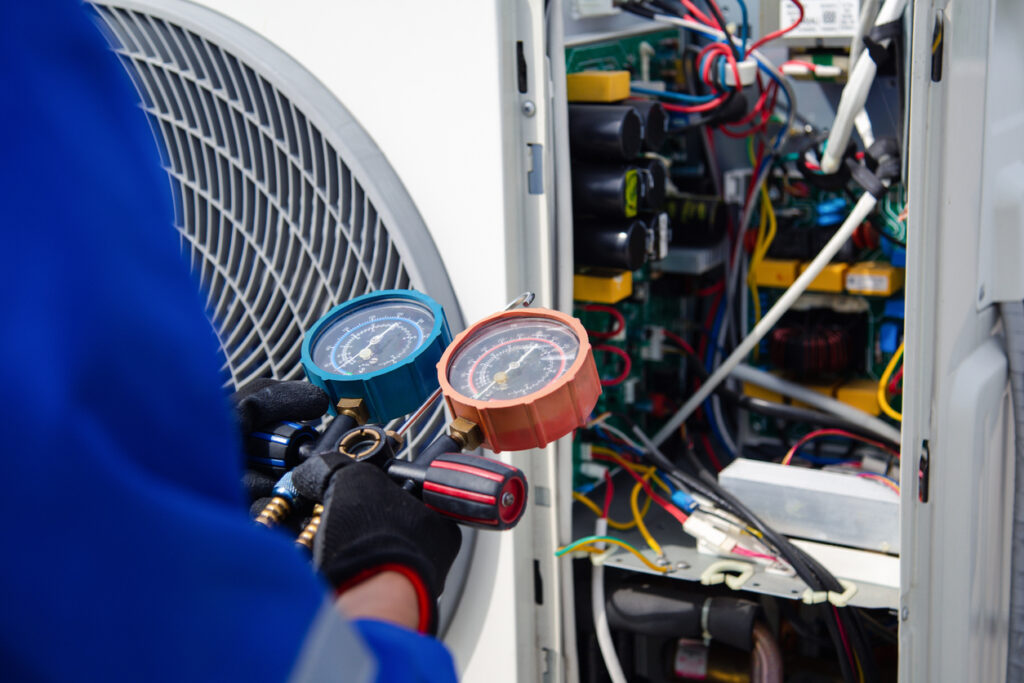
The purpose of an air conditioner is to remove heat from your home, leaving you cool and comfortable even on the hottest summer afternoons. While modern AC systems are complex, understanding the main parts can help you make informed decisions about maintenance and repairs.
At Roth Home, we've been helping Portland homeowners with their cooling systems since 1976. Here's our expert guide to the seven most important components that work together to keep your home cool.
Air Conditioner Parts & Functions
1. Blower Motor: The Air Circulator
Your blower motor ensures proper air movement throughout your home. It pulls warm air through return vents, pushes it across the cold evaporator coil, and distributes cooled air through your ductwork. Without this crucial component, you'd have cold air stuck in one place.
2. Evaporator Coil: The Heat Absorber
Inside your home, the evaporator coil works like a heat magnet. As warm air passes over this cold coil, it pulls heat and humidity from your home's air. This process is why you feel that pleasant, cool air flowing from your vents.
3. Compressor: The Powerhouse
Think of the compressor as the heart of your AC system. Located in your outdoor unit, it pressurizes refrigerant gas, preparing it to absorb heat from your home. When your compressor works efficiently, your whole system runs smoothly.
4. Condensing Coil: The Heat Releaser
Working with the compressor outside, the condensing coil releases captured heat into the outdoor air. It's like a radiator in reverse, helping your refrigerant cool down and prepare for another cooling cycle.
5. Fan The Heat Disperser
The outdoor fan helps your system release heat effectively. It pulls air across the condensing coil and compressor, preventing overheating and ensuring efficient operation.
6. Air Filter: The System Protector
While simple, your air filter plays a vital role. It catches dust and debris before they can damage sensitive components or reduce efficiency. A clean filter also helps maintain healthy indoor air quality.
7. Thermostat: The Control Center
Modern thermostats are the brains of your cooling system. They monitor temperatures, control operation cycles, and help you manage energy use. Smart thermostats can even learn your schedule and adjust automatically for optimal comfort and efficiency.
Speak to an Air Conditioning Expert
For more information about air conditioning in Portland, reach out to Roth Home—serving homeowners since 1976! Our team of experienced air conditioning repair, installation, and maintenance technicians will walk you through the process. No matter the issue, our team is ready to help.
A good home ventilation system can greatly reduce or even eliminate your reliance on an air conditioner for cooling in your Portland home. This can dramatically lower utility bills. Here are three home ventilation options to consider to help keep your home cool without spending too much.
Natural Ventilation
By opening windows in your home during the cooler morning and evening hours, you can let the wind naturally cool your home. Open windows on the shady side of your home to draw in cool air and open windows on the opposite side to create a cross-breeze. In homes with multiple stories, open windows on each floor, allowing hot air to rise and exit out of the upper windows while cooler air is naturally drawn in from the lower windows to replace it. Close the windows during the heat of the day to retain the cool air.
Ceiling and Portable Fans
In combination with natural ventilation or even with air conditioning, fans can help you feel cooler at the same temperature. Install ceiling fans in common areas such as the living room, and use portable fans for individual cooling. To improve natural ventilation, use box fans in windows on the opposite sides of your home, with one exhausting air and one drawing air in, which will create a stronger cross-breeze. Because fans make you feel cooler by drawing away perspiration, not by actually cooling the air, you should turn off fans when you leave the room to save energy.
Whole-House Fans
Whole-house fans are typically installed in the floor of the attic and through the ceiling below, allowing them to draw hot air out of the home and exhaust it through the attic vents. Cool air is then drawn in through open windows to replace the exhausted air. Whole-house fans move large volumes of air and can sometimes replace an air conditioner in cooler areas while using less than 25 percent of the energy.
For more information about home ventilation options, talk to our HVAC experts at Roth Home. We proudly serve the Portland area.